

Spinal Decompression Therapy in Northbrook, IL
Explore non-surgical spinal traction and learn what a personalized evaluation may involve at Health Solutions Precision Spinal Care.
What is spinal decompression?
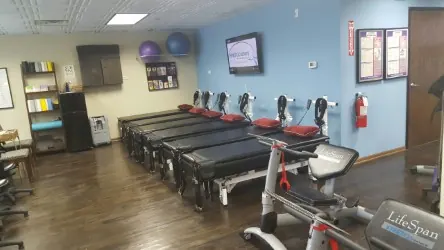
Non-surgical spinal decompression uses a traction table to apply controlled pulling forces to the spine. The goal is to reduce mechanical loading temporarily in selected patients. It is not surgery and does not require a forceful neck adjustment.
Evidence of lasting benefit varies by condition, and decompression is not suitable for everyone. A clinical evaluation is important before considering treatment.
Worried about neck cracking?
Spinal traction is different from a high-velocity chiropractic neck adjustment. The doctor should explain which body region is being treated, how the equipment works, and what you should expect to feel. You can ask about options that do not involve neck twisting or cracking.
What happens during a consultation?
Review symptoms and history
Discuss back or neck symptoms, prior diagnoses, previous treatments, and any imaging already available.
Check whether traction is appropriate
Screen for warning signs and conditions that may make traction unsuitable, such as some fractures, instability, or other serious spinal conditions.
Explain the equipment
Ask about positioning, comfort, the treatment region, and when to stop a session if symptoms increase.
Agree on a care plan
Review alternatives, expected costs, follow-up, and how the response to care will be evaluated.
Frequently asked questions
What is non-surgical spinal decompression?
It is a type of mechanical spinal traction. A controlled pulling force is applied through specialized equipment; it does not involve surgery.
Does spinal decompression crack or twist your neck?
Traction itself is not a high-velocity neck adjustment. Ask which techniques are planned and explain if you want to avoid neck twisting or cracking.
Can spinal decompression help a herniated disc?
Traction is sometimes considered for disc-related symptoms, but research findings are mixed and it is not a proven way to reverse a herniated disc. A clinician should assess your specific condition.
Is spinal decompression appropriate for sciatica?
Some people with radiating leg pain may be evaluated for traction, but suitability depends on the cause and examination findings. New weakness or bowel/bladder changes require urgent medical assessment.
Does spinal decompression hurt?
Treatment should not cause severe or worsening pain. Tell the clinician immediately if you experience increased pain, numbness, or other concerning symptoms.
How many spinal decompression sessions will I need?
There is no universally appropriate number. The clinician should explain the proposed schedule and reassess whether treatment is helping.
Who should avoid spinal decompression?
Certain conditions, including some fractures, spinal instability, serious neurologic problems, or other contraindications, may make traction unsafe. An evaluation is necessary.
Where can I learn about spinal decompression in Northbrook, IL?
Contact Health Solutions Precision Spinal Care to ask about available traction services, an evaluation, and whether treatment is appropriate for you.
Have questions about your care options?
Contact Health Solutions Precision Spinal Care to discuss your concerns and whether an evaluation is appropriate.